
The Ring of Fire
The Ring of Fire is a horseshoe-shaped zone surrounding the Pacific Ocean, stretching over 40,000 km, that is famous for its frequent earthquakes, volcanic eruptions, and tectonic activity. It includes countries in Asia, Oceania, and the Americas.
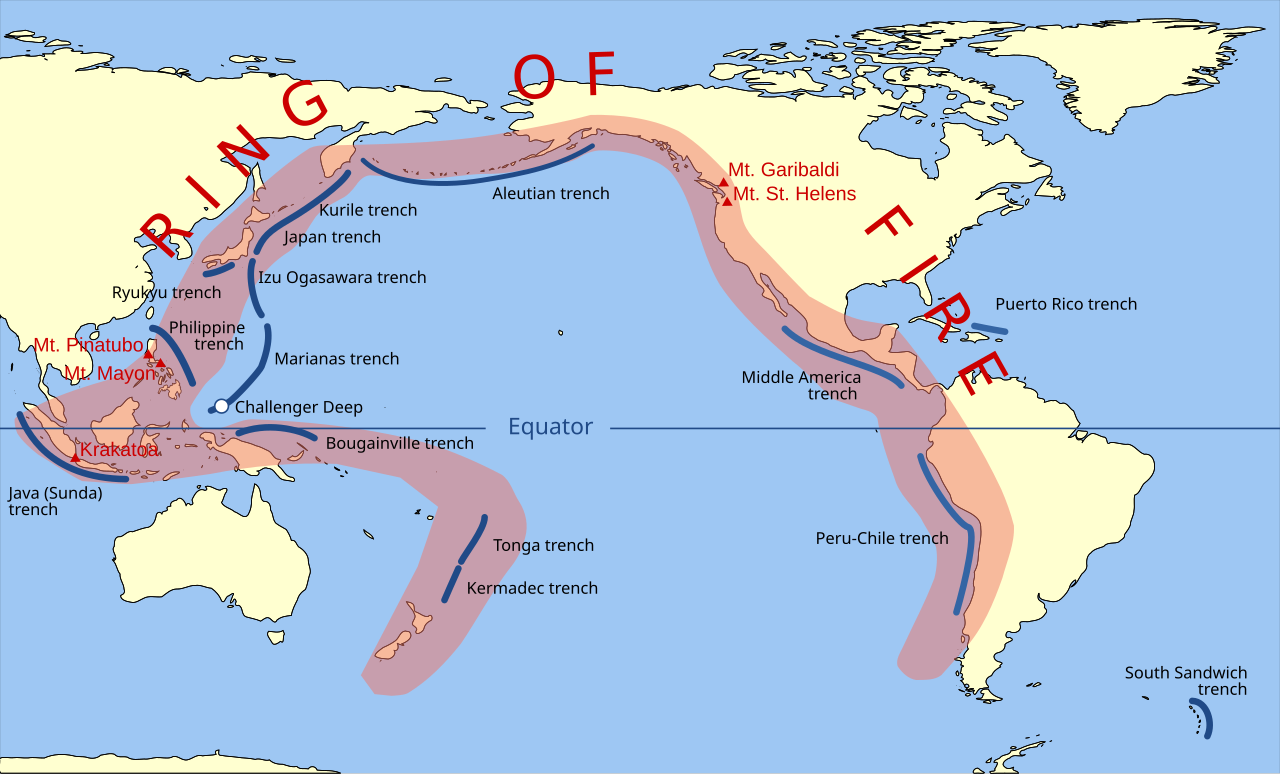
Why the Ring of Fire is important
The Ring of Fire is significant for several reasons:
-
Geological activity
- It is the result of plate tectonics. The Pacific Plate and surrounding plates collide, subduct, or slide past each other, creating volcanoes and earthquake zones.
- About 75% of the world's active and dormant volcanoes are located in this region.
-
Natural hazards
- Countries along the Ring of Fire face high risks of earthquakes, tsunamis, and volcanic eruptions, which have shaped both the landscape and human history.
- Notable disasters, like the 2004 Indian Ocean earthquake or Mount St. Helens eruption in 1980, occurred along this belt.
-
Economic and scientific significance
- Geothermal energy resources are abundant due to volcanic activity.
- The Ring of Fire is a key area for studying plate tectonics, earthquakes, and volcano formation.
-
Cultural and historical impact
- Many civilizations have adapted to or been affected by volcanic activity, influencing architecture, agriculture, and mythology.
- For example, in Japan, Mount Fuji is not only a volcano but also a cultural and spiritual symbol.
Countries in the Ring of Fire
| Country | Link |
|---|---|
| Indonesia | Link to the Indonesia map |
| Japan | Link to the Japan map |
| Philippines | Link to the Philippines map |
| New Zealand | Link to the New Zealand map |
| Chile | Link to the Chile map |
| Mexico | Link to the Mexico map |
| United States | Link to the United States map |
| Canada | Link to the Canada map |
| Russia | Link to the Russia map |
| Papua New Guinea | Link to the Papua New Guinea map |
Key facts
- The Ring of Fire is responsible for around 90% of the world’s earthquakes.
- Its volcanoes include famous peaks like Mount Fuji (Japan), Mount Merapi (Indonesia), and Mount Pinatubo (Philippines).
- Tectonic activity along this belt constantly reshapes coastlines and landscapes.
References
- USGS – What is the “Ring of Fire”?
- National Geographic – Plate Tectonics and the Ring of Fire
- Encyclopaedia Britannica – Ring of Fire | Definition, Map, & Facts